Showing posts with label body language. Show all posts

ELCS LAB INTERNAL 2019

ELCS LAB INTERNAL 2019
AERO A

1. Define body language
Body language means the movements or positions of our body that show other people how a person is feeling, without using words Body language is a type of nonverbal communication.  Physical behaviour Such as facial expressions, body posture, gestures, eye movement, touch is used to express or convey information.

It has been suggested that body language may account for between 50 percent to 70 percent of all communication. Understanding body language is important, but it is also essential to pay attention to other cues such as context.

2. Facial Expressions, Postures and Gestures - Explain in a few words.
Facial expressions -


Postures - 
It has been suggested that body language may account for between 50 percent to 70 percent of all communication. Understanding body language is important, but it is also essential to pay attention to other cues such as context.


Gestures means a movement of the hands, arms, or head, etc. to express an idea or feeling:


3. Define proxemics.
 Proxemics is the study of human use of space
Public space is the space that characterizes how close we sit or stand to someone, like a public figure or public speaker. So, if you are at an event listening to a professor give a lecture, you are probably about 12 - 25 feet away.
Social space means we're getting a little closer, about 4 - 12 feet away. This is the kind of space you're probably in if you're talking to a colleague or a customer at work.
Personal space is even closer. In this case, you're probably about 1 - 4 feet away from someone. This is reserved for talking to friends or family.
Intimate space is for people who you are very close to. In this case, you're probably less than a foot away and you might even be touching the other person. This is the space you're in with a romantic partner, for example.

2. Define word stress and mention any three rules of stress marking

When a word has more than two syllables in English, one syllable will receive more importance than the others when it is pronounced. This is the syllable that receives the primary word stress. This means that, compared to the other ones, the vowel sound of that syllable will be slightly:

louder,
longer,

at a higher pitch.
There are two very important rules about word stress:

One word, one stress. (One word cannot have two stresses. So if you hear two stresses, you have heard two words, not one word.)
The stress is always on a vowel.

3. What is meant by intonation.
Intonation means the rise and fall of the voice in speaking.


Test How Good you Walk

Now on wards make it a note to observe your standing or sitting or relaxing positions. Whenever you feel stress in any particular muscle part of your body, change the placement of your legs or shoulders. This automatically reduces the stress and makes the seat comfortable. Our way of walking also carries our body language.

These mistakes occur even when we are walking. Some have this habit of swinging their hands and arms part in the air long. This causes trouble for others who walk beside them. 

Some walk with head bent down. This causes stress on neck also. And this shows lack of confidence and timid nature. So always walk with your head held high. 

How to correct the faults in walking 

* Draw a line on the floor with a chalk

* Take a hard bound book and place it on your head.

* Stand on the line 

* Keep your chin parallel to the ground.

 * Hang the hands loosely on your sides.

* Take a deep breath. 

* Looking straight with a broadened shoulder, start walking on the line carefully.

* Take care that the book remains on your head as long as you are walking. 

* Once you achieve perfection in this, try with wet foot.


-- noenglish

Back to Body Language

Our silent vocabulary has its sign boards. These are the combination of postures and gestures. When we talk, our hands move according to the mood, tone and expressions of the face. Our body also takes position to accompany them. So this silent language of the body accompanies us while talking as well. 

In general a posture means the position in which we hold our body upright while standing or lying down. The word posture is derived from the Latin ponere - means to put or place. 

Posture includes training our body to stand, walk, sit and lie in positions. It opts for the least strained positions. Muscles and ligaments are a part of these postures. If we are afraid or tense the muscles take stressful positions. They stretch relaxed way when we are happy or without tension. When we know this, it becomes easy for us to train ourselves to have stress free body language. 


Remember some of the positions where you intentionally stress a particular part of your body. 
Sitting tight at the edge of a chair
Digging the floor with your big toe of the foot
Feeling helpless and leaning over a chair or a table.
There are many such positions where we strain our body to transfer the mind's stress. This body posture reading makes the other person read your mind and measure your stress or tension.  

-- noenglish


    Body Language - fact or fiction

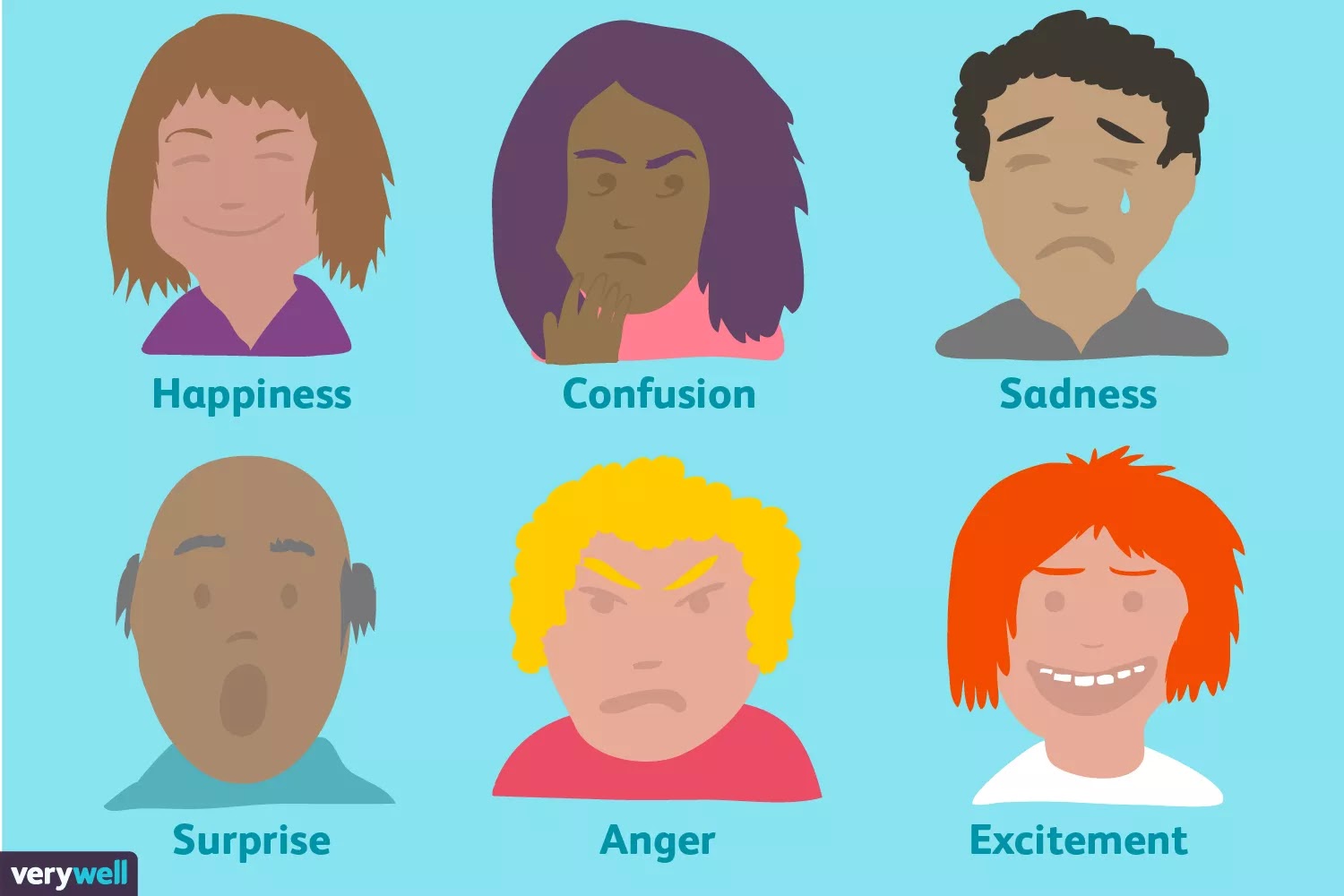
    Let us take look upon the other part of our body language. Body language, in general, shows the natural responses. They originate in the mind and spread to the various body parts according to the connectivity. When we are happy our lips relax a bit, eyes carry the smile as well, and the neck stays straight. 
    When we feel the sadness, the eyes carry the seriousness of the thoughts, lips tighten, the chin stays slant. Extending further hands too come into the scene and cup the cheek in the hand as though supporting the neck as it could not offer any support. Observe the occasions carefully, when you had come across such postures in the recent past.

    Previously we discussed about the details of facial expressions. Eye contact is the most effective tool of the face talk. Individuals may train themselves to hide their intentions and look good on face. They successfully control their facial expressions. Their eyes look bright and confident. They might be dying of fear inside. How to transfer the fear and where?

    Observe carefully. And remember there are other parts of the body that are moveable. The hands and the legs. The inner fear is transferred to either the hand movements or fixing the legs. The hands positions are called Gestures. Postures are the placement of legs that reflect the shades of thinking of a person. 


    Observe the above pic carefully and every day count the occurrences when you come across these postures and gestures. The interest towards humans and keen observation of their body movements is hte only way to learn the rights and wrongs of body language. 

    The psychology of a person is reflected through these cues of the body. We could control our hasty gestures and postures and even the facial expressions with a few self taught sessions. Learn slow and apply with patience. We are sure to understand ourselves and others too with a good base of information. 

    Some more facts about postures and gestures in tomorrow's post. Stay tuned dears!

    -- noenglish


    Today noenglish reached its 2000 views

     Thanks to all dears for making this blog complete its 2000 views. As I look back from the day I started this blog on June 1, 2018, learned the art of writing anew each day. It expanded my view about me inwardly and at the world too. My hearty thanks to all!
     
     
     IT was just that thought of relieving myself of the thoughts that disturb me  suggested to start writing as a diary. But on a second thought I told myself why not a blog. It would record my thoughts, ideas and experiences. Teaching is my identity. Every thought starts with it and surrounds it.
    It has taught me many things. Made me a learner before I think about commanding my lads.
    To have patience before I lose it.
    To empathise before I punish them
    To make a mind plan before I take up the activity.
    I grow with each batch of students - learning and unlearning it. 
     
    It was way back on 1st October, 2001, started my innings.
    The first ever demo of the class I taught was Sarojini Naidu's poem.
    Young, innocent, clever, naughty, curious  students staring at me. Some are ready to give me a cue or two back to take for. I sensed the intention from their faces. Automatically a smile came on my lips. I'm, suddenly, at ease. I told myself, yes they are listening. They liked it, yet they want to show a bit of themselves. Relax. Now its the time to prove. 

    I gave a long stare towards them and said "As students you had been through ten years of English. Now without a second thought tell me which part of speech is - IS"

    Their eyes gave a look as though commenting - is this a question worthy to test our acumen...
    My lips smiled again. I said,"I'm new to the profession. Take your liberty. Give the answer without a second thought. You have every right to make a mistake."

    I continued with the girls, one by one, the answers poured in.
    preposition
    adverb
    pronoun
    adjective
    "This is the time to tighten the grip. And prove my point." 
    I found the way to show I'm THE teacher. 
     
    Took each one to task. Had an elated arguments why it is a preposition
    It comes before a noun ma'am. 
    Give me an example,
    He is a doctor. See it came before the noun.
    Wow...good... I said. 

    Why it is an adverb.
    How can it be a pronoun or an adjective. For these too their point of view followed. I learned how differently we can view things.
    :) :) :)  
    Then I asked them one more question
    What is the past tense form of IS
    All at once the answer uttered - WAS

    Now tell me which part of sentence is -IS
    NO need for the answer... They identified their mistake.   :)  :) 
     
    All the class gave broad grin. 
    Once they smiled means I'm in as a faculty. 
    Its my first practical lesson of body language. 


    A Language without Alphabet

    We all carry a language unspoken, unknown, yet very familiar and inescapable.
    It has no alphabet
    It has no syllabus
    It has no text books
    Yet it's teachers are more sought after.
    It's application has no boundaries.

    Put a finger across your lips... shhh... it's a sign for silence

    Put a hand on the bike's handle and your foot on the pedal, your body is speaking that it's ready to move

    A simple wave in  the air could give two options either come here or dont come 
    Yes, it's the language spoken by our body.
    We commonly call it Body Language.
    Its very important to move our body parts in a controlled manner to reflect the efficient use of body language.
    It's alphabet is divided into three groups
    One is Facial expressions
    Second is Gestures and
    Third is the Postures.


    Each division has many alphabet that help us in speaking the most civilised way. and impress the authorities or elders. Secondly, it's absence also expresses how closer the other person is and how familiar we are to each other. We have to know when to apply it or not to. That just belongs to the common sense part of a human.
    Let's learn the words that describe each movement of our body parts that depict in perfection.

    COORG

    THE BIRTH PLACE OF CAUVERY THE FOREST LOCALE THE EVENING SKYLINE BEAUTY OF THE SUNREISE